Close on a home in Key Largo and you inherit the roof, the dock, the permits on file with the county. You do not inherit the seller's flood insurance rate. Under the National Flood Insurance Program's Risk Rating 2.0, which replaced the old zone-based pricing model in 2022, premiums are calculated against the specific building, not the address history attached to it. FEMA caps annual increases at 18 percent for a policyholder who stays put, but a new buyer gets none of that runway. You start at the full current-year rate on day one, regardless of what the previous owner was quietly grandfathered into.
That single fact upends a lot of what buyers assume about Key Largo's pricing. The market looks like a clean ladder on paper: pay less, live inland; pay more, get a canal; pay the most, get the ocean at your door. But the ladder was never really pricing water access. Water access, it turns out, is available at nearly every rung. What actually separates the rungs, and what the ladder is quietly pricing all along, is flood risk exposure, and that exposure no longer maps cleanly onto the zone label a listing agent puts in the description.
The Three Rungs, On Paper
Key Largo's price bands are consistent enough to describe in broad strokes:
| Property type | Typical starting price | What you're buying |
|---|---|---|
| Non-waterfront single-family | Low $500,000s | Dry lot, often community-based water access nearby |
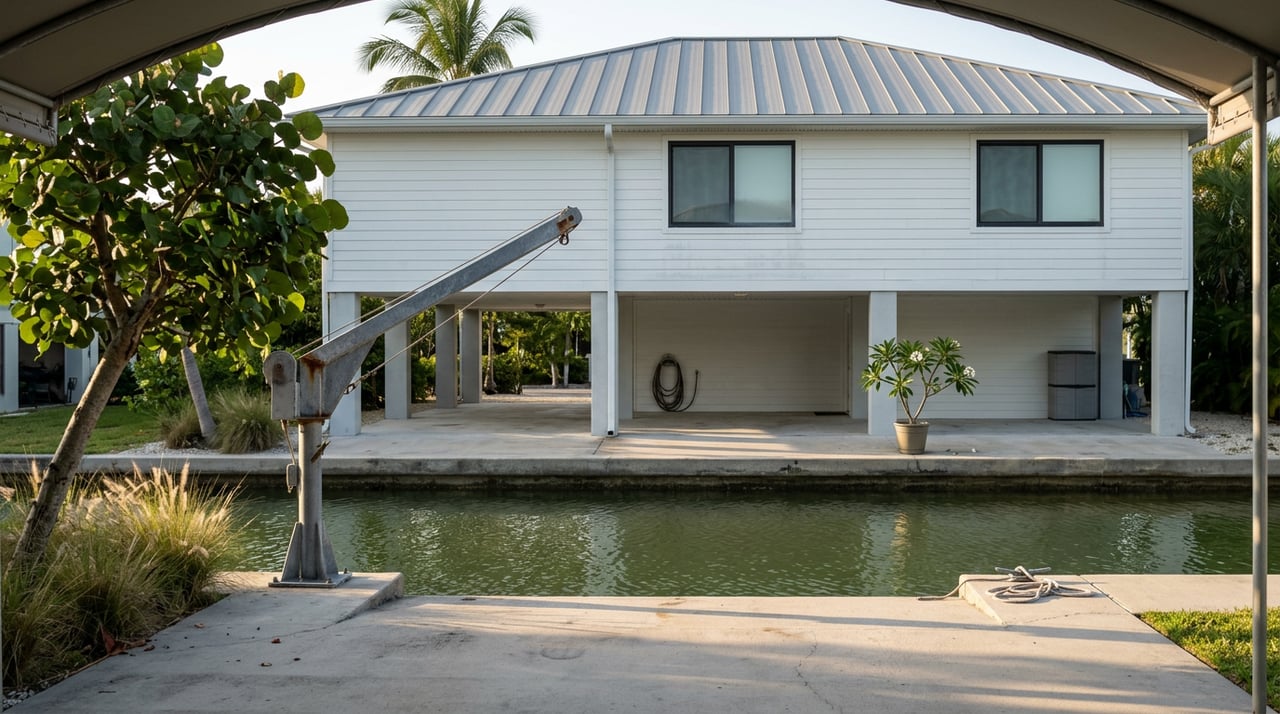
| Canalfront | Low $1,000,000s | Protected dockage, direct or near-direct offshore access |
| Oceanfront or bayfront | Above $3,000,000 | Open water at the property line, unobstructed views |
Manufactured homes can enter the market from the mid-$600,000s, and condos span a wide range depending on the building. The pattern holds broadly across the island: the closer you sit to open water, the higher the number.
What that table does not show is that several non-waterfront neighborhoods were built with a workaround baked in, one that lets residents skip the canalfront premium and still keep a boat.
What the Ramp Neighborhoods Actually Deliver
Largo Sound Village sits on the oceanside of Key Largo and is made up mostly of non-waterfront homes. A voluntary homeowner's association gives members access to a private park and boat ramp for an annual fee, which puts residents on the water without a dock attached to their own lot.
South Creek Village runs a similar model with more documented detail. Its private homeowner's park includes a boat ramp and basin offering 72-hour temporary dockage, along with a tiki hut, trailer parking, and a dog park, all reachable through Adams Cut for quick trips to both the Atlantic and Florida Bay. The fee to join has been listed at $150 a year. Several South Creek Village listings also note an X flood zone designation on high ground, one of the few pockets of the island where that label applies.
Twin Lakes offers a comparable arrangement without a mandatory HOA at all, a shared easement that supports kayaks, paddleboards, and small vessels along with a bonus community ramp. Riviera Village, another non-waterfront community, appears regularly in listings for elevated CBS homes with the same community-access framing.
None of these neighborhoods replace what a private dock gives a canalfront or oceanfront owner. There is no permanent slip, and dockage windows like South Creek Village's 72-hour limit mean you are not keeping a boat tied up indefinitely. But for a buyer whose actual use case is weekend fishing trips or getting a boat to the reef a few times a month, the difference between owning a $560,000 home with ramp access and a $1.1 million canalfront home with a private dock is not really about whether the water is reachable. It is about how often you need it reachable, and what you're willing to trade for the convenience.
Where Most of the Market Actually Trades
The transaction data from earlier this year backs up something buyers rarely think through on their own: most of Key Largo's activity does not happen at the postcard end of the market.
In March 2026, the median sale price across Key Largo homes sat at $768,500, while the average sale price came in at $1,615,055. That gap is not a rounding error. It reflects a handful of high-end closings in the same month, including sales at the $2.75 million, $3 million, $4.5 million, and above $5 million price points, all pulling the average well above where most buyers were actually transacting. The most active price band that month was $650,000 to $799,000, which alone accounted for 11 closed sales, more than any other range on the board.
That band sits almost entirely in non-waterfront and entry-level canalfront territory, the exact tier where ramp-access neighborhoods like South Creek Village and Largo Sound Village compete. Year-to-date closings through March reached 81, up sharply from 63 over the same period the year before, with March alone showing a 26.7 percent jump in closed transactions compared to March 2025. Buyers are not waiting on the sidelines for oceanfront deals. They're moving in the middle of the market, where the ramp arrangement lets them buy the lifestyle without the deed.
The Zone Label Stopped Doing the Work
Here is where the insurance shift changes the math for everyone, ramp neighborhood or not.
Before Risk Rating 2.0, an X zone designation functioned almost like a selling point on its own. Buyers and agents alike used it as shorthand for cheaper coverage. Under the current system, FEMA prices a policy against the specific building: its distance from water, its construction type, prior flood claims tied to the parcel, and how high the first floor sits above base flood elevation. Two homes in the same zone, on the same street, can carry meaningfully different premiums once those individual factors are run through the model.
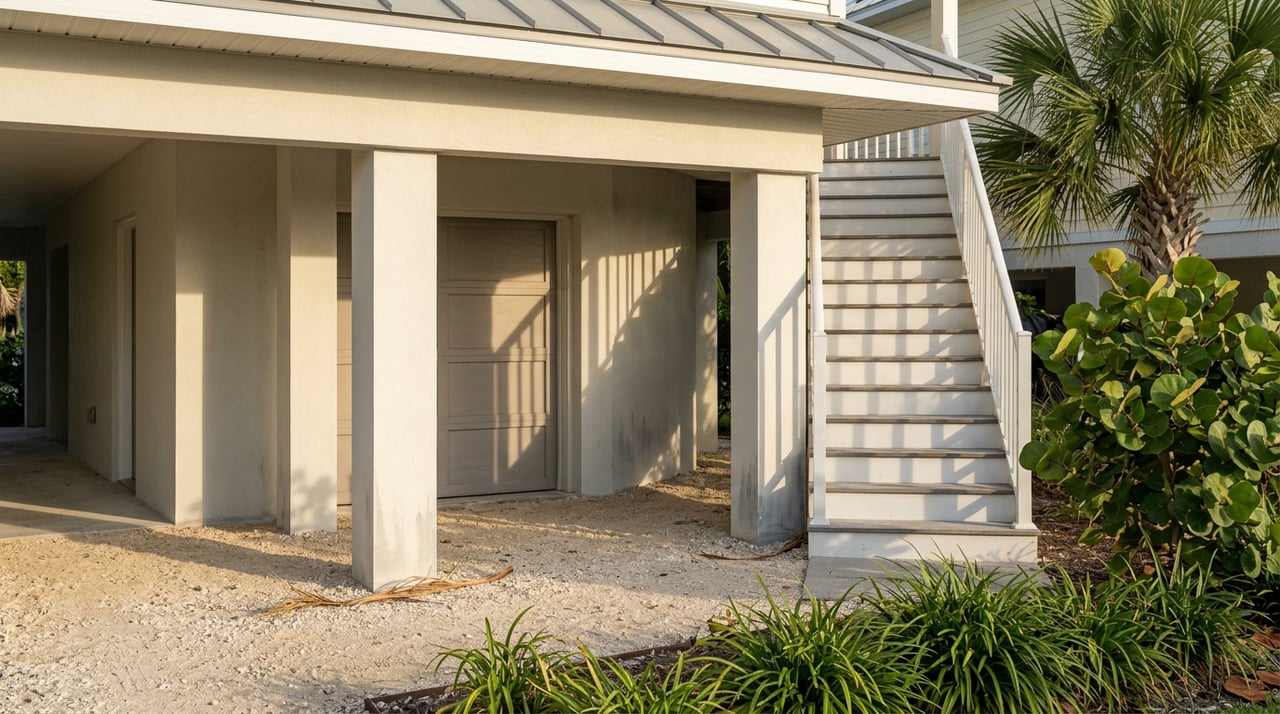
It also means Zone X was never a guarantee of zero risk to begin with. FEMA's own guidance describes X as an area of moderate flood hazard, generally between the boundaries of the 100-year and 500-year floodplains, not a designation free of exposure. A stilt home well elevated above base flood elevation in an AE zone can now qualify for a better rate than a ground-level structure sitting in a nominal X zone, because the building itself, not the map color, drives the number.
For a buyer comparing a ramp-access non-waterfront home against a canalfront property, this means the insurance line item is no longer something you can estimate from the listing description alone. It has to be quoted against the actual structure before you're locked into a price.
What To Actually Ask Before You Write an Offer
A few habits translate this into something usable during a real transaction:
- Request a flood insurance quote during your inspection period, not after closing, since you will start at the full current rate with no seller carryover.
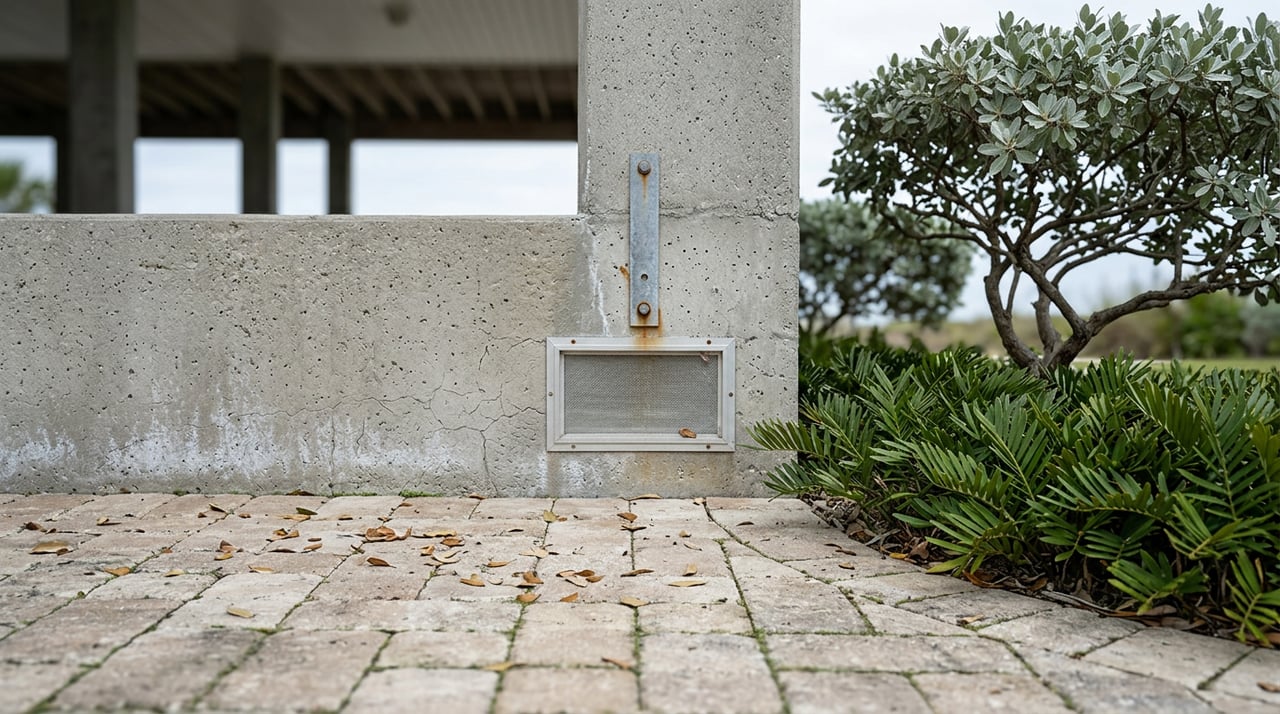
- Ask for the property's elevation certificate early. It documents the relationship between the living area and base flood elevation, and it's the document underwriters actually use.
- If a listing highlights ramp access through a voluntary HOA, get the current annual fee and any dockage time limits in writing before you assume it functions like a private dock.
- Compare the individual building's construction and elevation against comparable homes rather than relying on the flood zone label to estimate cost.
A Few Questions Worth Asking
Does an X flood zone designation in Key Largo still mean lower insurance? Not automatically. Since Risk Rating 2.0 took effect, FEMA prices premiums against the specific building rather than the zone alone, so an X zone home with a poor elevation profile can cost more to insure than expected, while a well-elevated home in a higher-risk zone can come in lower.
Can a non-waterfront buyer get real boat access in Key Largo? Yes, in specific neighborhoods. Communities like Largo Sound Village, South Creek Village, and Twin Lakes maintain private or shared boat ramps with community access to the Atlantic and Florida Bay, though typically with time-limited dockage rather than a permanent private slip.
Do I inherit the seller's flood insurance rate when I buy? No. New buyers start at the current Risk Rating 2.0 rate for the building from day one. Any rate cap that protected the previous owner from steep annual increases does not transfer with the sale.
If you're weighing a ramp-access home against a canalfront property in Key Largo, or trying to make sense of what a specific building's flood exposure actually costs before you write an offer, that's the kind of detail worth working through with someone who watches this market closely. Karan Moeller has spent decades in the Upper Keys and can walk you through what a specific address, zone, and elevation profile actually mean for your bottom line. Let's Connect.