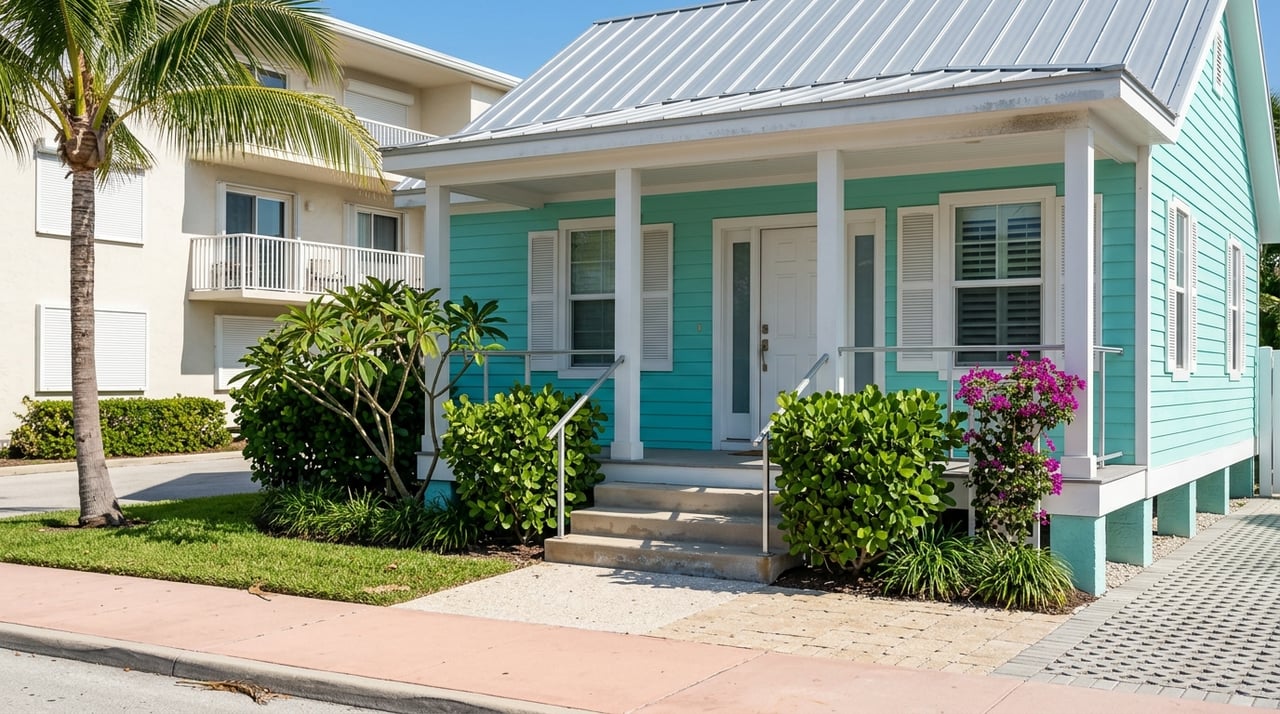
You do not have to spend long in Key West to realize one thing: your second-home decision is about much more than square footage. In 33040, the choice between a condo and a cottage can shape how often you visit, how much hands-on upkeep you take on, and how flexible the property feels over time. If you are weighing both options, this guide will help you compare the tradeoffs that matter most in Key West, from pricing and parking to insurance, rental rules, and historic review. Let’s dive in.
Why this choice matters in Key West
Key West is an expensive market, and it does not behave like a simple condo-versus-house comparison. In spring 2026, Zillow reported a median sale price around $1.06 million in 33040 and a median list price of about $1.266 million. Realtor.com showed a median listing price of $1.296 million, 511 homes for sale, and described the market as balanced in March 2026, with homes selling about 4.9% below asking on average and a median 86 days on market.
Within Key West, pricing can shift sharply by micro-location and property type. Realtor.com neighborhood medians show Key West by the Sea Condominium around $695,000, while single-family areas such as Key Haven and Riviera Shores were listed much higher. That means your view, parking setup, and distance to Old Town or the waterfront may matter just as much as whether the home is attached or detached.
Condos: easier ownership, more shared rules
For many second-home buyers, a condo fits the classic lock-and-leave model. Under Florida condo law, the association is responsible for maintenance, repair, and replacement of the condominium property it is required to maintain, including common elements except where limited common elements are assigned differently by the declaration. In plain terms, that can mean less day-to-day responsibility when you are away.
That convenience is a real benefit if you plan to use the property seasonally or want fewer moving parts between visits. Shared exterior maintenance can reduce the number of separate vendors and repairs you need to manage on your own. For out-of-town owners, that simplicity often carries real value.
What to review before buying a condo
A Key West condo can also come with added cost layers and governance that deserve close review. Monthly dues, board rules, special assessments, and building-condition issues can affect your total ownership experience as much as the purchase price. In older coastal buildings, those details matter even more.
Florida law now requires structural integrity reserve studies for certain residential condominium buildings that are three habitable stories or higher. For budgets adopted on or after December 31, 2024, associations subject to these requirements may not choose to fund less than the required reserves for the covered items. For buyers, that makes the association’s budget, reserves, and inspection history especially important.
Before you commit to a condo, ask for:
- The current budget and reserve information
- The latest structural or inspection documents, if applicable
- The association’s master insurance policy
- Deductible details
- Any recent or pending special assessments
- Rules that may affect your use of the property
Condo insurance works differently
Insurance in a condo is layered. Florida requires condominium associations to carry adequate property insurance, and the law allows associations to maintain flood insurance for common elements, association property, and units. Your own unit-owner policy typically covers items excluded from the association policy.
That is why it is important to understand where the association’s coverage ends and your personal coverage begins. A lower-maintenance property can still carry meaningful insurance complexity, especially in a coastal market like Key West.
Cottages: more privacy, more direct responsibility
If your picture of a Key West second home includes more privacy, fewer shared walls, and a more independent feel, a cottage or bungalow may be the better fit. Detached homes do not come with condominium common-element governance. That often gives you more control over the home itself and a less communal ownership structure.
Still, detached does not always mean unrestricted. A standalone home may be part of a homeowners association, and Florida HOA law addresses association powers, assessments, records, budgets, and reserves. If a cottage sits within an HOA-governed area, you should review those documents just as carefully as you would with a condo.
What ownership feels like in practice
The biggest lifestyle advantage of a cottage is usually autonomy. You are not relying on a condo board to manage the building, and you typically gain a more private ownership experience. For many buyers, that is the appeal.
The tradeoff is that you carry more direct responsibility for maintenance, weather resilience, and the practical realities of coastal ownership. That includes roof, exterior systems, storm preparation, and any approval requirements tied to the property. If you want a more hands-on home base in Key West, that may be worth it.
Historic district rules can affect both
This is one of the most important Key West-specific issues for second-home buyers. Many properties in Key West fall inside the local historic district. According to the City, properties within the district are under HARC jurisdiction, and a Certificate of Appropriateness may be required for exterior work including new construction, fences, decks, painting, repair, remodeling, landscaping, and demolition.
That matters whether you buy a condo or a cottage. If you expect to change paint colors, update exterior features, add fencing, rework landscaping, or make visible improvements later, you will want to confirm what approvals may apply. Cottage buyers often assume they will have complete freedom outside, but in Key West that is not always the case.
Parking can change the equation fast
In Key West, parking is not a small detail. It can be a daily quality-of-life issue, especially for a second-home owner who wants easy arrivals, simple guest use, or space for seasonal stays. In some cases, a property with dedicated off-street parking may feel more convenient than a more charming option without it.
The City’s residential parking permit program costs $39.13 per year and allows access to marked residential spaces in the Historic District, plus four hours of free parking once per day in select municipal lots. Seasonal residents who live in Key West for four months or longer can qualify. The City also states that boats, trailers, RVs, and vehicles over 20 feet cannot park on the street or in municipal lots, and street parking must be moved every 72 hours.
Why parking matters for condos and cottages
With condos, you should confirm whether parking is deeded, assigned, first come first served, or off-site. With cottages, you should look at lot configuration, access, and how practical street parking will really be. In Key West, parking can influence convenience and long-term enjoyment just as much as interior finishes.
Rental plans require early zoning review
If you hope your second home may also produce rental income, check the rules early. In Key West, the deciding factor is not simply whether you buy a condo or a cottage. The City says transient rentals are allowed only in certain zoning districts, including HRCC-1, HRCC-3, HCT, HNC-1, and HNC-3, and the City requires a Business Tax Receipt for residential rental properties.
That means rental eligibility should be one of your first questions, not one of your last. A beautiful property may still be a poor fit for your goals if the zoning does not support the rental use you had in mind.
Flood and wind costs deserve equal weight
In the Florida Keys, the carrying cost of a property is never just about taxes and utilities. Monroe County states that all county property is in a floodplain, that flood damage is not covered by homeowners insurance, and that a federally backed mortgage in a Special Flood Hazard Area requires flood insurance. For a second-home buyer, flood zone, elevation, and insurance cost can be as important as price or layout.
This applies to both condos and cottages, though the cost structure may look different. With a condo, some coverage may sit at the association level while other risk remains yours. With a cottage, you may feel the full cost more directly. Either way, insurance should be part of your purchase analysis from the start.
A simple way to choose
If you are torn between the two, start by thinking about how you want ownership to feel, not just how you want the property to look. A condo often works best when you want easier upkeep, more shared responsibility, and a straightforward lock-and-leave setup. A cottage often works better when you want more privacy, more direct control, and a home that feels more independent.
In Key West, the smartest comparison points are usually these:
- Total monthly and annual carrying costs
- Parking setup and daily convenience
- Historic district approval limits
- Flood zone, elevation, and insurance impact
- Rental eligibility under local zoning
- Association financial health, if applicable
- How much maintenance you want to handle yourself
No two second-home buyers want the exact same thing. Some want low-maintenance convenience near Old Town. Others want a more private retreat with fewer shared elements. The right fit comes down to how you plan to use the property and how well the details support that plan.
If you are comparing Key West condos and cottages and want a grounded second opinion on what fits your goals, working with a Florida Keys advisor who understands coastal ownership details can make the process much clearer. Connect with Karan Moeller PA for thoughtful guidance tailored to your next move.
FAQs
What makes a Key West condo a good second-home option?
- A Key West condo can be a strong second-home choice if you want lower day-to-day maintenance, shared responsibility for common elements, and a more lock-and-leave ownership style.
What should you review before buying a Key West condo?
- You should review the association budget, reserves, inspection documents if applicable, master insurance policy, deductibles, rules, and any recent or pending special assessments.
What is the main benefit of buying a Key West cottage?
- A Key West cottage usually offers more privacy, fewer shared walls, and more direct control over the property compared with a condominium.
Do Key West historic district rules affect condos and cottages?
- Yes. If a property is within the historic district, exterior work may require HARC review and a Certificate of Appropriateness, whether the home is a condo or a cottage.
Can you use a Key West second home as a rental property?
- Possibly, but you need to verify zoning and local licensing early because transient rentals are allowed only in certain zoning districts and the City requires a Business Tax Receipt for residential rental properties.
Why is parking so important when buying a second home in Key West?
- Parking matters because Key West has local permit rules, street parking limits, and space constraints that can affect convenience, guest use, and how practical the home feels over time.
How does flood risk affect a Key West second-home purchase?
- Monroe County states that all county property is in a floodplain, flood damage is not covered by homeowners insurance, and flood insurance may be required depending on the property and financing.